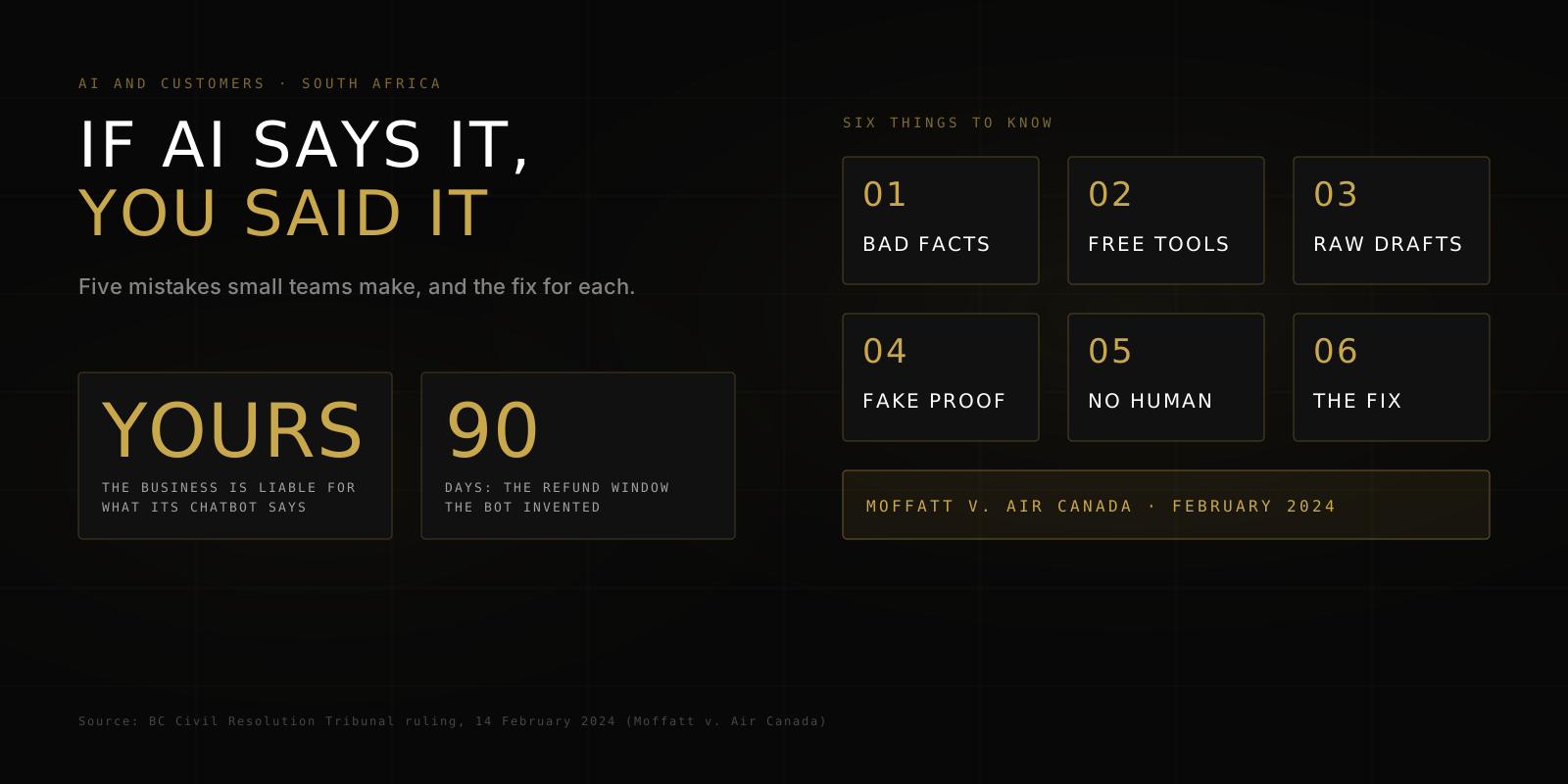
In February 2024 a Canadian tribunal ordered Air Canada to honour a refund policy that its own chatbot had invented. The airline argued the chatbot was a separate entity responsible for its own actions. The tribunal disagreed. The lesson for every small business is simple: if AI talks to your customers, you own what it says. These are the five most common ways staff misuse AI with customers, and what to do instead.
The Case Every Owner Should Know
Jake Moffatt asked Air Canada's website chatbot about bereavement fares after a death in his family. The chatbot told him he could buy a ticket and apply for a partial refund within 90 days. That was not the airline's policy, which says the discount must be approved before travel. When Air Canada refused the refund, Moffatt took it to the British Columbia Civil Resolution Tribunal and won.
chatbot invented
"separate entity" defence
AI tells customers
The tribunal found that a chatbot is still just part of the airline's website, and that it should be obvious the company is responsible for all the information on it. It made no difference whether the information came from a static page or a chatbot. Air Canada was ordered to pay the promised refund plus fees.
If AI says it to a customer, you said it.
Anaye Digital EditorialFive Mistakes And Their Fixes
-
01Letting AI State Policies, Prices and PromisesStaff ask an assistant to answer a customer and send it without checking. The assistant invents a warranty, a discount or a delivery date. Fix: give the AI your actual policy text to work from, and require a person to confirm any price, date, refund or guarantee before it is sent.
-
02Pasting Customer Details Into Free ToolsA staff member drops a complaint email, with names and account details, into a personal account to get a quick reply. That can breach POPIA and leaves the data outside your control. Fix: use approved business accounts, remove personal details first, and follow our red, amber and green rule.
-
03Sending Unread, Generic DraftsAI replies that are long, stiff or slightly wrong tell the customer nobody cared enough to read it. Names get wrong, details get mixed up. Fix: use AI for the first draft, then read every line aloud, personalise it and check the facts before it goes out.
-
04Faking Social ProofUsing AI to write testimonials or reviews, or to generate happy customer images, is dishonest and risky. Google has tightened its review policies against bulk solicitation, incentivised reviews and coordinated campaigns. Fix: ask real customers for real reviews, and use AI only to help you reply to them.
-
05Hiding Behind the BotA chatbot with no way to reach a human turns a small problem into a lost customer. POPIA also gives people the right to challenge automated decisions and ask for human involvement. Fix: tell customers when they are talking to an automated assistant, and always offer a clear route to a person.
A Five-Question Check for Any AI Message
1. Did I read every word? 2. Is every fact, price and date correct? 3. Does it promise anything we have not agreed? 4. Does it contain personal information that should not be there? 5. Does it sound like us? If any answer is no, fix it before it goes out.
Stay Ahead of the Curve
Practical digital marketing insights for marketers and business owners, no fluff, straight to your inbox.
Build The Fix Into Your Process
Rules that live in people's heads fail on a busy Friday. Put them where the work happens.
-
Keep an approved facts sheet. One page with your real prices, policies, opening hours and delivery times, that staff paste into the prompt so the AI works from your facts, not its guesses.
-
Make review part of the workflow. Nothing customer-facing goes out until a named person has approved it. Say who, and write it down.
-
Test your chatbot like a customer. Before launch, ask it awkward questions about refunds, warranties and cancellations. Fix every wrong answer, and keep testing monthly.
-
Log the mistakes. When AI gets something wrong, note it and update the facts sheet. It is the cheapest training you will ever do.
-
Train the team once. Twenty minutes with real examples from your own business beats a long policy nobody reads.
Pair This With Your Policy
This guide is the customer-facing half of safe AI use. The staff-facing half is a written policy that sets approved tools and data rules, which our free template gives you. To choose where to start, read how SMEs can use AI without wasting money. This is general guidance, not legal advice. If you run customer-facing automation at scale, have a POPIA-literate adviser review it.
Get the Next Guide First
Practical digital marketing insights for marketers and business owners, no fluff, straight to your inbox.
Sources
Moffatt v. Air Canada ruling and reasoning: American Bar Association, Business Law Today, Information Age and Law Society Journal. Review policy tightening: Insites. POPIA and automated decisions: Michalsons.